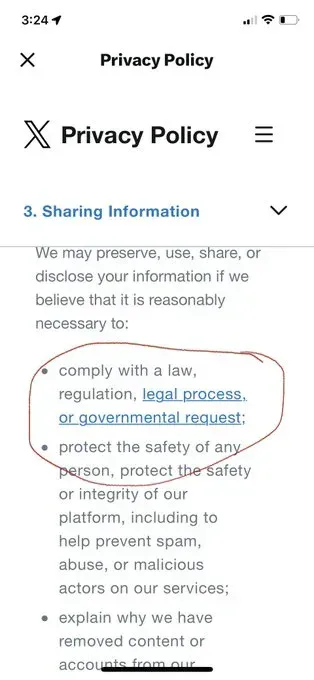
Ireland's AI Committee Pushes for Sweeping Algorithmic Controls, Age Verification, and Speech Regulation

A new parliamentary report reveals Ireland's ambitions to regulate recommendation algorithms, mandate 'balanced' content delivery, and potentially implement nationwide digital identity verification.
December 2025
Related Reading:
- Understanding Ireland's Data Protection Commission (DPC): A Comprehensive Overview
- Ireland's NIS 2 Implementation: A Practical Roadmap to Cybersecurity Compliance
- The EU AI Act: Comprehensive Regulation for a Safer, Transparent, and Trustworthy AI Ecosystem
Executive Summary
Ireland's Joint Committee on Artificial Intelligence has released its First Interim Report containing 85 recommendations that could fundamentally reshape how Irish citizens interact with AI systems and social media platforms. Published on December 16, 2025, the report calls for the establishment of a National AI Office by August 2026, mandatory algorithmic impact assessments, and perhaps most controversially, requirements that recommendation systems deliver "balanced" viewpoints while being completely banned for children.
The committee, chaired by Deputy Malcolm Byrne (Fianna Fáil), explicitly states that Ireland "must not shy away from the EU AI Act or try to dilute it," treating the European regulation as "a minimum baseline for national AI regulation, not a maximum standard." This signals Ireland's intent to potentially exceed EU requirements in regulating AI and online content.
 Compliance Hub
Key Recommendations and Their Implications
Algorithmic Content Control
The report's most far-reaching proposals concern how platforms deliver information to users. Recommendation 63 states that "recommender systems should be designed so that recommended material that is put out delivers a balanced point of view, that is evidence based." This raises immediate questions about who determines what constitutes "balanced" and "evidence-based" content, and how such standards would be enforced without becoming tools for viewpoint discrimination.
Recommendation 16 goes further, calling for "recommender systems to be switched off by default" for all users, with social media companies "banned from turning on recommender algorithms for accounts used by children." The practical implementation of such a ban would necessitate robust age verification systems—a reality the report acknowledges implicitly while avoiding explicit endorsement of digital identity requirements.
The Age Verification Dilemma
While the report repeatedly emphasizes child safety and calls for banning algorithmic recommendations for minors, it sidesteps the technical reality that enforcing such restrictions would require verifying the age of every platform user. This implicit requirement for universal age verification could effectively establish a nationwide digital identity checkpoint for accessing algorithmic content feeds—a trend we've seen accelerating globally (see: The Global Age Verification Disaster: How Privacy Dies in the Name of "Safety" and Global Digital ID Systems Status Report 2025).
Ireland has already moved in this direction. In July 2025, Coimisiún na Meán's Online Safety Code introduced age verification requirements for video-sharing platforms, prohibiting simple self-declaration as sufficient verification. Minister Noel O'Donovan has indicated Ireland is watching Australia's under-16 social media ban and developing age verification mechanisms through Ireland's digital wallet system.
Misinformation and Content Moderation
Recommendation 17 calls for "obligations on platform owners to prevent the use of AI-driven recommender systems for misinformation campaigns aimed at destabilising society." The vague language around "destabilising society" provides significant interpretive latitude that could be applied broadly to political speech, contested scientific claims, or other contentious discourse.
 Compliance Hub
The report also flags "harmful and hateful content pushed by recommender systems" as a gap in current regulation that "must be addressed in any EU and national legislation." This mirrors similar approaches under the EU's Digital Services Act, which has faced criticism for enabling global censorship of constitutionally protected speech. Two organizations featured prominently in the committee's evidence sessions: the Irish Traveller Movement and BeLonG To, both publicly funded advocacy groups. The Irish Traveller Movement testified that children in its community are vulnerable to algorithmic bias, while BeLonG To cited concerns about "AI perpetuating discriminatory stereotypes."
Institutional Framework
National AI Office
The report recommends establishing a National AI Office by August 2026 to coordinate Ireland's AI governance. Recommendation 4 specifies this office should have "the necessary levels of independence, technical experts and resourcing to ensure that there are no conflicts between the State's supports for industry to harness AI, the State's own deployment of AI, and the design, implementation and enforcement of regulations to govern AI."
However, civil society groups have already raised concerns. The Irish Council for Civil Liberties (ICCL) urged the committee to "press for an independent national AI Office with a dedicated budget and Commissioner... it should not be housed within any of the government departments." The current plan places the office under the Department of Enterprise, Tourism and Employment, potentially creating conflicts between innovation promotion and rights protection.
 Compliance Hub
Regulatory Expansion
Ireland has already designated 15 authorities to oversee AI under the EU AI Act's distributed enforcement model. These include the Central Bank of Ireland for financial AI, Coimisiún na Meán for media systems, the Data Protection Commission for privacy matters, and various sectoral regulators. The committee recommends these bodies receive "dedicated, ring-fenced and multi-annual resourcing" to handle their expanded AI oversight responsibilities. (For context on Ireland's evolving regulatory landscape, see: The Masks Are Off: Ireland Appoints Meta Lobbyist to Police Meta on Data Protection)
Privacy and Civil Liberties Concerns
Several recommendations raise significant privacy implications. Recommendation 53 calls for "a publicly accessible central register for all algorithmic systems used by the Government and public bodies," including "procurement costs, the performance metrics used, and any findings of assessments carried out prior to deployment." While transparency in government AI use is valuable, the report's approach to private sector algorithmic systems suggests broader surveillance ambitions.
Recommendation 47 states that "those bodies with regulatory functions with regard to AI must conduct audits of AI enabled platforms to ensure compliance with the law." Combined with the requirements for platforms to deliver "balanced" content and prevent undefined "misinformation," this creates a framework for extensive government involvement in content curation decisions.
The report does acknowledge privacy concerns in specific contexts. Recommendation 77 calls for "secure offline tools" for disabled people using text-to-speech systems "so that their privacy, data and identity information is better protected." Yet this recognition of privacy risks for vulnerable users contrasts with the report's broader push for algorithmic auditing and content control systems that would necessarily involve extensive data collection.
The Innovation vs. Regulation Debate
The report explicitly rejects framing AI governance as a choice between innovation and regulation. Citing testimony from the ICCL, it argues that "the false dichotomy of innovation vs. regulation serves the vested interests of billionaires," concluding that "robust, well-implemented regulation of AI is essential."
This position contradicts concerns raised by major technology companies. At the EU level, Google's Kent Walker has warned that excessive regulation risks "slowing down Europe's development and deployment of AI," while Meta's Joel Kaplan described the EU AI Code of Practice as "over-reach" that "will throttle the development and deployment of frontier AI models in Europe." The Draghi Report on EU competitiveness similarly flagged "onerous" regulatory barriers in the tech sector. (For a comprehensive overview of the EU AI Act's technical requirements and prohibited practices, see our detailed analyses.)
Ireland's position is particularly notable given the country hosts European headquarters for many major technology companies including Apple, Google, Meta, and Microsoft—making the Irish DPC effectively the GDPR enforcement authority for Big Tech across the EU. The report's recommendation for the State to "explore publicly owned AI resources and technologies" (Recommendation 31) and "take action to mitigate against an overreliance on the private sector" suggests a shift toward more state-directed AI development.
Copyright and Training Data
Recommendation 14 calls for the "EU Copyright Directive to be strengthened to ensure that content cannot be used to train AI models without the consent of its creators." This aligns with ongoing EU debates about text and data mining exceptions, though it would significantly constrain AI development if implemented strictly.
What Comes Next
The committee has indicated it will publish additional interim reports before a final report at the conclusion of its 24-month mandate. It has called for a Citizens' Assembly on Artificial Intelligence, Digitalisation and Technology, and for the issues raised to be debated in both houses of the Oireachtas.
Ireland is scheduled to hold the EU presidency in the latter half of 2026, with an AI Summit planned for October. The report positions this as an opportunity for Ireland to "lead in the debate globally on AI adoption, governance, and ethics."
Analysis: Trading Digital Freedom for Centralized Control
The report reveals Ireland's growing comfort with government intervention in digital information flows. Several troubling patterns emerge:
Vague mandates with broad application: Terms like "balanced viewpoint," "evidence-based," "misinformation," and "destabilising society" lack precise definitions, creating interpretive flexibility that could be wielded against disfavored speech.
Child safety as a gateway to universal surveillance: Banning algorithmic recommendations for children requires identifying who is a child, necessitating age verification infrastructure that applies to all users.
Regulatory arbitrage between EU floors and national ceilings: By treating EU requirements as minimums rather than standards, Ireland positions itself to exceed European restrictions while maintaining EU-compliant cover.
Selective stakeholder input: The prominent role of publicly funded advocacy organizations in shaping recommendations about "harmful" content raises questions about viewpoint diversity in the committee's evidence gathering.
State-directed content curation: The requirement that algorithms deliver "balanced" and "evidence-based" content necessarily involves government or government-appointed bodies deciding what qualifies—a form of soft censorship dressed in neutral language.
Implications for Cybersecurity and Privacy Professionals
For organizations operating in Ireland or serving Irish users, the report signals several developments to monitor (see also: The Compliance Crossroads: Your Essential 2025 Guide to Navigating AI, Data Privacy, and New Global Regulations):
- Algorithmic transparency requirements may expand beyond current EU mandates, requiring detailed documentation of recommendation system logic and outcomes.
- Age verification infrastructure will likely become mandatory for platforms with algorithmic content delivery, creating new identity management and data protection obligations. (For technical context, see: Australia's Digital Revolution: Age Verification and ID Checks Transform Internet Use and Google Adds Age Check Tech as Texas, Utah, and Louisiana Enforce Digital ID Laws)
- Content moderation audits by Irish regulators may scrutinize how platforms handle contested categories of speech, particularly around topics deemed capable of "destabilising society."
- Public sector AI procurement will face new transparency requirements, potentially affecting vendors serving Irish government clients.
- Copyright compliance for AI training data may become more stringent, requiring consent-tracking systems for European content.
Conclusion
Ireland's Joint Committee on Artificial Intelligence has produced a report that, beneath its emphasis on safety and equality, establishes a framework for unprecedented government control over digital information flows. The combination of mandatory "balanced" content requirements, algorithmic auditing, age verification, and anti-misinformation obligations would give Irish authorities substantial influence over what citizens see online.
The report's authors frame their recommendations as protecting vulnerable groups from algorithmic harm. Critics will note that similar justifications have historically preceded speech restrictions that ultimately serve incumbent political interests. As Ireland prepares for its 2026 EU presidency, the direction established in this report may influence broader European approaches to AI and online speech governance.
For broader context on the global regulatory landscape, see our coverage of the 2025 Global AI and Data Privacy Landscape and The Internet Bill of Rights: A Framework for Digital Freedom in the Age of Censorship.
The full report is available on the Oireachtas website: First Interim Report - Joint Committee on Artificial Intelligence
Further Reading:
- Global AI Law Comparison: EU, China & USA Regulatory Analysis
- Digital Compliance Alert: UK Online Safety Act and EU Digital Services Act Cross-Border Impact Analysis
- NextDNS Age Verification Bypass: The DNS Revolution Against Digital ID Laws
This article is provided for informational purposes. Organizations should consult qualified legal counsel regarding compliance obligations under Irish and EU law.