Australia's December 27 Search Engine Age Verification: What Compliance Teams Need to Know About the Six-Month Implementation Window

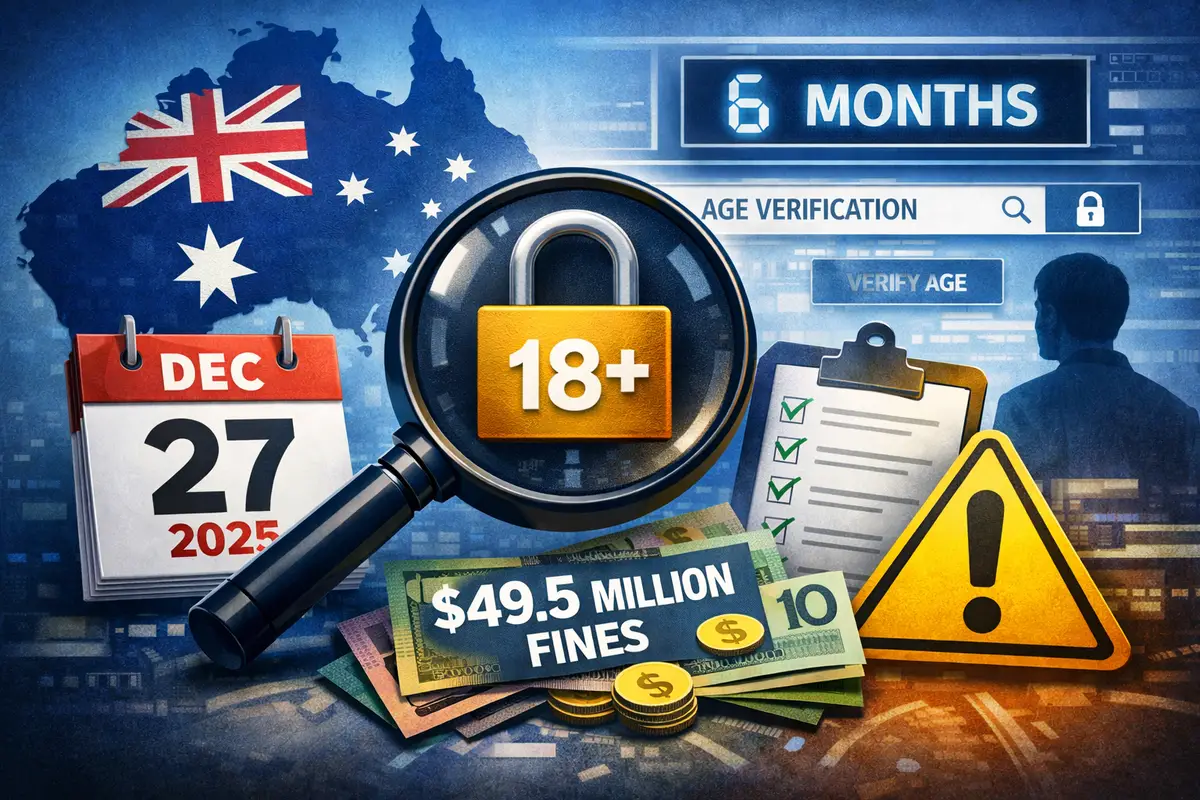
Bottom Line Up Front: While Australia's December 10, 2025 social media age ban captured global headlines, a quieter but equally consequential regulation takes effect on December 27, 2025: mandatory age verification for search engines. With search providers facing up to $49.5 million in fines per breach and a six-month implementation window, compliance teams must act now to understand these requirements and prepare verification systems that will fundamentally change how Australians access the internet.
 Compliance Hub
The Timeline That Matters
Australia's online safety overhaul is unfolding in two critical phases:
December 10, 2025 - Social media platforms (Facebook, Instagram, TikTok, X/Twitter, Reddit, YouTube, Snapchat, Threads) must prevent users under 16 from holding accounts. This affects adults too, as every citizen logging into select online platforms must now pass through digital ID verification, biometric scans, face matching, and document checks.
December 27, 2025 - Search engines (Google, Bing, Yahoo, DuckDuckGo) must begin implementing age verification for logged-in users. However, search engines have up to six months from that date to fully implement age assurance technologies. For users under 18, safety tools such as "safe search" functions must be set at their highest setting by default to filter out pornography and high impact violence.
The critical compliance distinction: While the code becomes effective December 27, 2025, search engine providers have until June 27, 2026 to achieve full implementation of age assurance measures.
Understanding the Regulatory Framework
The Internet Search Engine Services Online Safety Code (Schedule 3) was registered by eSafety Commissioner Julie Inman Grant on June 27, 2025, under section 140 of the Online Safety Act 2021. This industry-developed code, co-led by the Digital Industry Group Inc. (DIGI) representing Google, Microsoft, and Yahoo, creates legally binding obligations for search engine operators.
Scope of Application
The code applies specifically to "internet search engine services" that require user authentication. This targets:
- Google (90%+ Australian market share, encompassing Gmail, Drive, Maps integration)
- Microsoft Bing (integrated with Outlook, Office ecosystem)
- Yahoo Search
- Other authenticated search services
Critical exemption: Search engines are NOT required to implement age assurance for users who are not logged in. The code explicitly states that "Internet search engine services are designed for general public use, with or without an account."
However, this exemption may provide limited practical relief. Most Australians remain persistently logged into Google or Microsoft accounts for email, cloud storage, and productivity tools, meaning age verification will effectively impact nearly all Australian internet users.
Core Compliance Requirements
Search engine providers must:
- Implement age assurance measures for account holders within six months of December 27, 2025
- Apply highest-level safety filters by default for accounts identified as "likely to be Australian children" under 18
- Filter pornography and high-impact violence at minimum from search results and advertising
- Establish reporting mechanisms for users to flag violations
- Review and mitigate risks that Australian children will access harmful content through search results
The "Likely to Be" Standard
The code introduces a risk-based approach: providers must activate maximum safety settings for accounts their age assurance systems determine are "likely to be" held by Australian children. This language creates flexibility but also ambiguity around:
- Acceptable error rates for age determination
- Burden of proof when false positives occur
- Appeals processes for incorrectly flagged accounts
- Documentation requirements to demonstrate "reasonable steps"
Privacy and Enforcement: The $49.5 Million Question
Financial Penalties
Failure to comply with the code could result in civil penalties of up to AUD $49.5 million (approximately USD $32.2 million) per breach. This penalty structure mirrors the social media minimum age requirements, signaling that Australian regulators view search engine compliance with equal seriousness.
The "per breach" language creates significant exposure: Does each improperly filtered search result constitute a separate breach? Each unverified under-18 account? Compliance teams lack clarity on how violations will be calculated and assessed.
Verification Methods: The Technical Challenge
The code deliberately does not prescribe specific age assurance technologies, leaving implementation details to providers. Expected methods mirror those being deployed for social media compliance:
Age Verification Systems:
- Government-issued ID upload and document verification
- Driver's license or passport scanning
- National Digital ID integration (Australia's Digital ID Act 2024 commenced December 1, 2024)
Age Estimation Systems:
- Biometric facial analysis through video selfies
- AI-powered age determination from facial features
- Third-party verification services (e.g., Yoti, AU10TIX)
Age Inference Systems:
- Behavioral analysis of account activity
- Historical data from existing account information
- Credit card verification
- Cross-platform identity signals
Privacy Concerns and Data Protection
The Australian Government's own $6.5 million Age Assurance Technology Trial revealed concerning findings about verification systems:
- Error rates reaching 30% for certain biometric estimation methods
- "Concerning evidence" that technology providers were seeking to collect excessive personal information
- Accuracy issues as individuals age or voices change, rendering initial biometric data outdated
Despite these concerns, verification methods will require adults to provide:
- Biometric data (facial scans, voice recognition)
- Government identity documents
- Financial information for credit card verification
- Detailed behavioral profiles from account activity
While the Online Safety Amendment (Social Media Minimum Age) Act 2024 includes provisions prohibiting platforms from using age verification data for other purposes without consent, enforcement and compliance monitoring of these data protection requirements remain unclear.
The Compliance Gap: What Remains Unknown
Six critical questions confront compliance teams as the December 27 deadline approaches:
1. Technical Standards and Certification
No official certification process exists for age assurance technologies in Australia. Unlike the UK's approach with specific approved vendors, Australian providers must make independent determinations about which systems constitute "reasonable steps" and are "technologically feasible and reasonably practicable."
This creates litigation risk: If a provider's chosen verification system proves inadequate, will the eSafety Commissioner accept the provider's good faith effort, or impose penalties for ineffective implementation?
2. Cross-Border Complications
Search engines operate globally. How will providers differentiate Australian users from international users? The code applies only to Australian children, but:
- VPNs enable users to appear in different jurisdictions
- The code acknowledges this circumvention risk but provides no enforcement mechanism
- Providers may need to implement geographic verification in addition to age verification
3. Integration with Digital ID Framework
Australia's Digital ID Act 2024 establishes a national digital identity system with phased rollout:
- Phase 1 (December 2024): Commonwealth and state government entities
- Phase 2 (By December 2026): Private sector participation
Will search engines be expected to integrate with the government's myID system? Can they use third-party private verification services? The intersection between commercial age assurance and government Digital ID infrastructure remains undefined.
4. False Positive Management
When age estimation systems incorrectly flag adult accounts as belonging to minors (false positives), what processes must providers establish?
- Appeals mechanisms and response timeframes
- Evidentiary standards for adults challenging age determinations
- Temporary access provisions during dispute resolution
- Documentation requirements to demonstrate due process
5. Reporting and Transparency Obligations
Beyond implementing verification systems, the code establishes reporting requirements, but crucial details remain unspecified:
- Frequency and format of compliance reports to eSafety Commissioner
- Public transparency about verification accuracy rates
- Incident reporting when verification systems fail
- Annual attestations or third-party audits
6. International Precedent and Coordination
Australia is not operating in isolation. The UK's Online Safety Act implemented age verification requirements on July 25, 2025, while the EU debates similar measures. Will Australian providers coordinate verification systems internationally to reduce duplication? Can an age verification performed for UK compliance satisfy Australian requirements?
Cross-border data flow restrictions may complicate using international verification providers, particularly given Australia's strict privacy regime and recent data sovereignty concerns.
Strategic Implications for Search Providers
The Google Ecosystem Challenge
Google's dominance creates unique compliance complexity. Over 90% of Australians use Google, not just for search but as the foundation of digital life:
- Gmail (email with persistent login)
- Google Drive (cloud storage requiring authentication)
- Google Maps (location services with account integration)
- YouTube (video platform already subject to separate age restrictions)
- Google Workspace (business productivity tools)
Implementing age verification across this ecosystem without fragmenting user experience represents a massive technical and UX challenge. Will users face multiple verification prompts across Google services? Will verification for YouTube satisfy search verification requirements?
The Microsoft Strategic Response
Microsoft faces parallel challenges with Bing integration across:
- Outlook (email platform)
- OneDrive (cloud storage)
- Microsoft 365 (productivity suite)
- Xbox (gaming with existing age verification)
Microsoft's existing age verification for Xbox and Microsoft accounts may provide a technical foundation, but extending it across all services while maintaining privacy protections will require significant development.
Small Provider Dilemma
While Google and Microsoft have resources for compliance, smaller search providers face impossible economics:
- Building age verification systems requires substantial capital investment
- Third-party verification services charge per-transaction fees
- Australian market may not justify compliance costs
- Risk of market exit, further consolidating Google's dominance
Recommended Compliance Actions
For search engine providers operating in Australia, immediate priorities include:
Q1 2026 (January-March)
Gap Analysis and Technology Selection:
- Audit current user authentication systems
- Identify which services require age verification under the code
- Evaluate age assurance technology vendors (verification vs. estimation vs. inference)
- Calculate implementation costs and timeline feasibility
- Assess geographic detection capabilities for Australian users
- Review data protection impact assessments
Legal and Regulatory Engagement:
- Submit questions to eSafety Commissioner seeking implementation guidance
- Participate in industry working groups coordinating compliance approaches
- Engage Australian privacy counsel on data protection obligations
- Evaluate potential integration with Digital ID framework
- Establish cross-functional compliance taskforce (legal, product, engineering, privacy)
Q2 2026 (April-June)
System Development and Testing:
- Select and contract with age assurance technology provider(s)
- Develop user experience flows for verification process
- Build appeals and dispute resolution mechanisms
- Implement geographic detection for Australian users
- Conduct internal testing with privacy-preserving safeguards
- Create compliance documentation demonstrating "reasonable steps"
Stakeholder Communication:
- Develop user communications explaining new verification requirements
- Prepare customer support resources for verification issues
- Establish escalation paths for false positive resolutions
- Create public transparency reporting framework
- Coordinate with eSafety Commissioner on implementation timeline
Ongoing (June 2026+)
Operational Compliance:
- Monitor age assurance system accuracy and error rates
- Track and respond to user appeals
- Generate compliance reports for eSafety Commissioner
- Conduct regular privacy audits of verification data handling
- Update systems based on regulatory guidance and enforcement actions
- Participate in industry coordination on evolving standards
The Broader Digital ID Trajectory
Australia's search engine age verification requirements don't exist in isolation—they're part of a comprehensive digital identity infrastructure emerging globally:
International Context
United Kingdom: Age verification enforcement began July 25, 2025 under the Online Safety Act, primarily targeting adult content but expanding to social media platforms.
European Union: The European Parliament voted November 26, 2025 to establish strict age limits for social media (age 13 minimum, age 16 for unrestricted access), with implementation through EU Digital Wallet verification.
Brazil: The Digital ECA (Children and Adolescents Statute) requires age verification "at each access attempt" for any service "likely to be accessed by minors," representing the world's most comprehensive scope.
Singapore: Following Australia's lead, announced January 10, 2025 plans to age-restrict social media access, actively engaging Australian counterparts.
The Privacy-Safety Tension
Australia's approach crystallizes the fundamental tension in internet regulation:
Safety imperative: Legitimate concerns about children's exposure to pornography, violence, and harmful content through search engines justify protective measures.
Privacy cost: Creating comprehensive identity verification infrastructure affects all users, not just children. Adults must surrender biometric data, government IDs, and behavioral information to access basic internet services.
Effectiveness uncertainty: Government trials acknowledge that current age assurance technologies have significant accuracy limitations and can be circumvented through VPNs, shared accounts, or simply browsing while logged out.
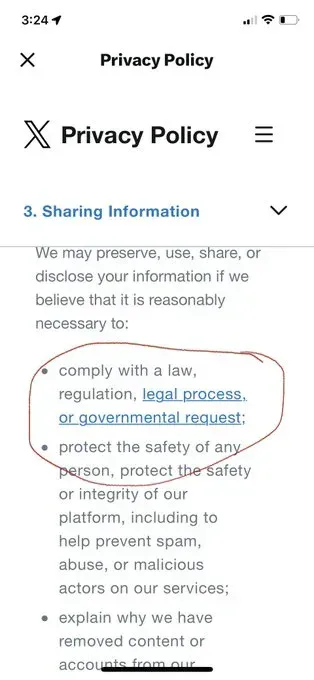
Surveillance infrastructure: Age verification systems create detailed databases linking identity to content consumption—systems that could be repurposed for broader surveillance or compelled by government authorities.
Lessons from Social Media Implementation
Australia's December 10, 2025 social media age ban provides early lessons for search engine compliance:
What's Working
- Industry coordination: Tech companies sharing approaches to reduce duplication
- Phased rollout: Giving platforms time to develop verification systems
- Privacy protections: Legal prohibitions on using verification data for other purposes
What's Failing
- Technical circumvention: Reports emerged within days of teens using:
- Parents' photos for verification
- VPNs to appear outside Australia
- Non-human images (including dogs) successfully passing age estimation
- Inexpensive masks fooling facial recognition
- False positives: Adult users incorrectly flagged and facing verification demands
- User experience friction: Verification adding significant barriers to account access
- Privacy concerns: Widespread user discomfort with submitting biometric data
Search engine providers should anticipate these same implementation challenges and proactively address them in system design.
Conclusion: The Compliance Imperative
Australia's December 27, 2025 search engine age verification requirements represent a watershed moment in internet regulation. With a six-month implementation window closing June 27, 2026, compliance teams face urgent deadlines to:
- Select and implement age assurance technologies
- Navigate privacy and data protection obligations
- Develop user experience that balances verification with usability
- Establish reporting and appeals mechanisms
- Prepare for $49.5 million per-breach enforcement
The code's deliberate flexibility on technical implementation creates both opportunity and risk. Providers have discretion to choose verification approaches, but must defend those choices if challenged by the eSafety Commissioner.
More fundamentally, Australia's search engine requirements are part of a global shift toward comprehensive digital identity verification. Compliance teams should prepare not just for Australian obligations, but for similar requirements likely to emerge across the UK, EU, and other jurisdictions.
The question is no longer whether age verification will become standard for internet services, but how companies will implement it while preserving privacy, usability, and fundamental digital rights.
Related Coverage:
- Australia's World-First Social Media Ban: What's Really Happening on December 10, 2025
- Tech Giants Pledge Compliance but Warn of Major Challenges as Australia Introduces Online Verification Law
- Analysis of Online Age Verification Mandates
- Brazil's Digital ECA: The World's Most Comprehensive Child Protection Law
- European Parliament Votes for Age Limits on Social Media
Privacy & Digital ID Resources: