
US Congress Threatens to Compel Australia's eSafety Commissioner Over Global Censorship Claims

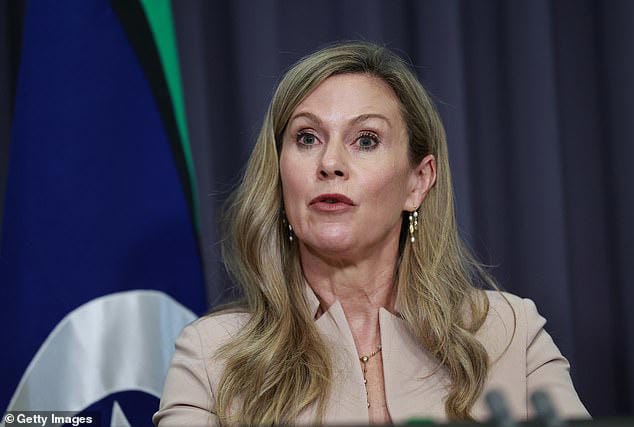
Republican lawmakers accuse Julie Inman Grant of harassing American tech companies and threatening free speech through extraterritorial enforcement
Executive Summary
Australia's eSafety Commissioner Julie Inman Grant faces unprecedented international scrutiny as the US House Judiciary Committee threatens to compel her testimony over allegations of implementing a "global censorship regime." The escalating diplomatic tension highlights the growing friction between national online safety regulations and American concepts of free speech protection.
The Congressional Summons
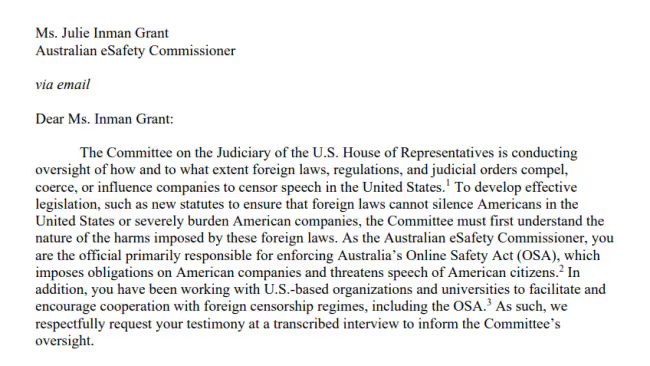
The US House of Representatives has issued an extraordinary letter threatening to compel testimony from Julie Inman Grant, Australia's eSafety Commissioner, amid allegations that her regulatory enforcement harasses American technology companies and attempts to implement extraterritorial content censorship.
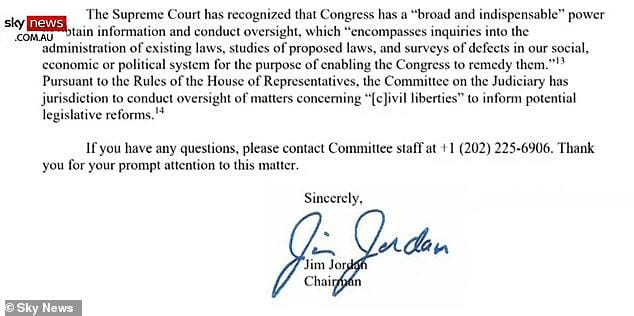
Jim Jordan, chairman of the House Committee on the Judiciary and a prominent Trump ally, sent a letter dated December 30, 2025, warning that while the request remains voluntary, "additional steps to obtain compliance" may be considered if she fails to cooperate. The committee has requested Grant schedule a transcribed interview by January 13, 2026, at 10:00 AM ET.
This represents the second formal request from Congress. Jordan initially requested Grant's testimony in November 2025 for a December 2 appearance, which she declined, citing she was "not in a position to attend an interview."
Core Allegations Against eSafety
The congressional letter outlines several specific concerns about Grant's enforcement activities, backed by internal eSafety correspondence obtained by the committee:
1. Extraterritorial Content Takedown Demands
Jordan's committee expresses concern over "the extraterritorial content moderation requirements of Australia's Online Safety Act, eSafety's attempts to mandate global content takedowns, and your collaboration with a US university and other foreign governments to design and implement a global censorship regime."
The letter specifically references Grant's 2024 legal action seeking global removal of footage from the livestreamed stabbing of Bishop Mar Mari Emmanuel in western Sydney. While X (formerly Twitter) argued that geo-blocking the content from Australian users was sufficient, eSafety's lawyers contended that VPNs could circumvent geographic restrictions, necessitating worldwide removal.
VPN Concerns Resurface: The December 30 letter reveals that eSafety formally asked American platforms how they would "mitigate potential circumvention via VPNs" in implementing the social media age ban. Jordan's committee argues this indicates Grant "may be using this playbook again" to justify extraterritorial enforcement.
Grant previously faced criticism from Australian politicians for similar demands. In 2024, then-Opposition Leader Peter Dutton called her global takedown attempts "silly," while the Free Speech Union of Australia challenged her authority to order worldwide content removal in multiple cases involving violent footage.
2. Systematic Pressure Campaign on Tech Platforms
Congressional investigators obtained internal eSafety correspondence showing what they characterize as a coordinated harassment campaign against American companies ahead of the December 10, 2025 social media age ban implementation:
Template Compliance Documents: On November 7, 2025, eSafety directed American platforms to release "public-facing" compliance commitments based on an official eSafety template. The correspondence included a pre-written "Statement of commitment to comply" document that platforms were expected to publish verbatim or with minor modifications.
Mandatory Meeting Demands: When platforms did not immediately comply with the template request, eSafety sent follow-up emails on November 16, 2025, demanding meetings to discuss their non-compliance. One email obtained by the committee stated: "eSafety would like to meet with [PLATFORM] as soon as possible to discuss your timeframes for communicating your age assurance process with your users."
Government Coordination: Separate emails from Australia's Communications Ministry dated November 16, 2025, solicited platform-specific "talking points" to demonstrate companies were "working collaboratively with the government." This coordination between regulatory and ministerial offices suggests an orchestrated pressure campaign rather than independent regulatory oversight.
Detailed Compliance Interrogation: The November 7 eSafety letter demanded platforms provide extensive technical details including:
- Exact methodology for identifying underage Australian users
- Number of accounts expected to be removed on December 10
- Specific steps platforms would take (deleting, deactivating, disabling, suspending accounts)
- Whether users would be given choices about their account fate
- Information provided to account holders and delivery timelines
- Age verification vendor selection and implementation details
- Government ID collection plans and privacy safeguards
- User reporting mechanism adjustments
- VPN circumvention mitigation strategies
This level of prescriptive oversight exceeds typical regulatory information requests and ventures into dictating platform operational decisions, according to committee analysis.
3. Stanford University Collaboration
The letter criticizes Grant's participation in a September 2025 roundtable event at Stanford University titled "Compliance and Enforcement in a Rapidly Evolving Landscape" where "'misinformation' pseudoscientists and censorious foreign government officials discussed how to build and operationalize an effective global internet censorship regime."
The event brought together officials from "entities with the worst track records of extraterritorial censorship, including the European Union and Brazil," according to committee documentation. Jordan argues these "close ties with Stanford are troubling given the university's past efforts to facilitate U.S. government censorship of lawful American speech," referencing committee findings that the Stanford Internet Observatory played a "key role" in enabling government censorship during the 2020 presidential election.
Grant also appointed a Stanford University-led academic advisory group to assess impacts of the Social Media Minimum Age obligation, further cementing the relationship that concerns congressional investigators.
The December 30 letter pointedly notes that Grant's attendance at the Stanford event "undermines the argument that you are 'not in a position to attend an interview' in the United States. Clearly, you are willing and able to return to the United States when it suits you."
eSafety's Defense
An eSafety spokesperson has pushed back against the characterization of their enforcement activities, stating:
"Technology companies which supply services or display content to Australians must comply with Australian laws and are required to take reasonable steps to comply. In the case of removal notices, eSafety considers geo-blocking to be a reasonable step."
The spokesperson cited recent cases involving murders of Charlie Kirk and Ukrainian refugee Iryna Zarutska, where eSafety accepted geo-blocking as sufficient compliance, demonstrating: "There's nothing we're doing that prevents American companies from displaying whatever they want to Americans."
Grant herself responded at Senate estimates, stating: "What I am zealous about is protecting children online," while confirming she would send Jordan a letter "explaining a few things" without committing to congressional testimony.
The Broader Context
Australia's Social Media Age Ban
The congressional investigation comes as Australia implements its world-first social media ban for users under 16, which took effect December 10, 2025. The Online Safety Amendment (Social Media Minimum Age) Act 2024 requires platforms including Facebook, Instagram, TikTok, Snapchat, X, YouTube, Reddit, Threads, Kick, and Twitch to prevent minors from holding accounts.
Companies face fines up to AU$49.5 million (US$33 million) for failing to take "reasonable steps" to prevent underage access. The law has no parental consent exceptions and applies regardless of whether parents approve their children's social media use.
This represents just one component of Australia's comprehensive digital age verification regime that now extends to search engines and will soon cover messaging platforms, app distribution services, and online gaming under six additional codes taking effect March 2026.
Tech Industry Pushback
Major platforms have challenged the legislation:
- Reddit confirmed it will take the Australian government to the High Court over the ban, arguing it forces "intrusive and potentially insecure" verification processes and violates implied freedom of political communication. This represents the second major constitutional challenge against eSafety regulations, following 4chan's lawsuit against UK enforcement attempts.
- Meta began purging accounts of users under 16 ahead of the December deadline, implementing multi-layered age verification approaches including facial recognition and government ID scanning.
- X owner Elon Musk has called Grant a "censorship commissar" and labeled the youth ban a "surveillance tool." The platform previously fought eSafety's global takedown demands over violent content, with Grant ultimately dropping legal action after facing criticism from Australian political leaders.
Snap Inc.'s Q3 2025 earnings call predicted daily active user decline in fiscal Q4, citing "the rollout of platform-level age verification, and new minimum age regulations for social media in certain jurisdictions."
International Implications
President Trump has stated he would stand up to any countries that "attacked" American technology companies, setting up potential diplomatic friction as other nations consider similar measures:
- Malaysia announced a ban on children under 16 from social media starting 2026
- France is considering a social media ban for children under 15 and a 10pm-8am curfew for 15-18 year-olds
- Singapore explicitly stated it shares Australia's objectives and is engaging with Australian counterparts to understand implementation
Multiple countries have expressed interest in Australia's approach as the "first domino" in global child safety regulation, despite significant concerns about the technical feasibility and privacy implications of mandatory age verification systems.
Legal and Jurisdictional Questions
Congressional Authority Limitations
Legal experts note significant constraints on congressional power in this situation:
- No Direct Jurisdiction: The House Judiciary Committee has no authority over Australian government activities or US-Australian diplomatic relations (which fall to the House Foreign Affairs Committee)
- Cannot Compel Foreign Testimony: While the committee can invite anyone to testify, it cannot legally compel testimony from individuals outside US jurisdiction who are not US government officials
- US Citizenship Factor: Grant was born in Seattle, Washington and moved to Australia in 2000, maintaining US citizenship. The committee's December 30 letter leans heavily on this status, citing Supreme Court precedent:
"US citizenship carries with it both benefits and responsibilities, and those, such as yourself, who enjoy the advantages associated with such citizenship should be willing to shoulder the responsibilities as well, including cooperating with congressional investigations."
The letter invokes United States v. Bryan (1950), which established that compliance with congressional inquiry is a "public duty, which every person within the jurisdiction of the [U.S.] Government is bound to perform when properly summoned."
More significantly, Jordan cites Blackmer v. United States (1932), which held that US citizens living abroad "continue to owe allegiance to the United States" and that "the United States possesses the power inherent in sovereignty to require the return to this country of a citizen, resident elsewhere, whenever the public interest requires it, and to penalize him in case of refusal."
Legal Reality: While these cases establish congressional authority to compel testimony from US citizens abroad, enforcement mechanisms remain complex. The committee could theoretically hold Grant in contempt of Congress and issue a subpoena, but practically enforcing such measures against a foreign government official operating in their official capacity raises unprecedented diplomatic questions.
The December 30 letter explicitly warns: "The Committee may have to consider, if necessary, additional steps to obtain compliance with our request."
First Amendment Concerns
Jordan's investigation reflects growing Republican concern about foreign regulations impacting American speech rights. The committee argues that global content takedowns set precedents allowing "foreign censors to silence protected American speech."
The committee has proposed legislation—the No Censors on our Shores Act (H.R. 1071)—specifically designed to prevent foreign laws from compelling American companies to censor speech or severely burdening US platforms with extraterritorial compliance requirements.
However, critics note that private companies voluntarily choosing to comply with foreign laws to access those markets differs fundamentally from direct censorship of Americans. eSafety maintains it only requires geo-blocking content from Australian users, not global removal—though the November 2025 correspondence requesting VPN circumvention strategies complicates this position.
The Freedom Caucus Influence
Jim Jordan chairs the House Freedom Caucus, a group of approximately 45 libertarian-leaning conservative Republicans. This faction has consistently opposed perceived government overreach and championed absolute free speech protections, often clashing with mainstream Republican leadership.
The caucus's libertarian ideology views any content moderation requirements—even those protecting children—as dangerous precedents for government censorship. This positions them at odds with both Australian child safety regulations and mainstream American concerns about social media harm to minors.
Privacy and Civil Liberties Concerns
Digital rights advocates have raised separate concerns about Australia's enforcement approach, which extends far beyond social media to fundamentally reshape internet access:
Comprehensive Digital Identity Infrastructure
Australia is simultaneously implementing multiple identity verification systems:
- Social Media Age Ban (December 10, 2025): Requires platforms to verify users under 16 and prevent account creation
- Search Engine Age Verification (December 27, 2025): Mandatory age assurance for all logged-in Google, Microsoft Bing, and Yahoo users
- Digital ID Act 2024: National digital identity system with government-backed verification through myID
- Additional Online Safety Codes (March 2026): Six more codes covering messaging, app stores, gaming platforms, and hosting services
The convergence of these systems creates what privacy advocates describe as a comprehensive surveillance infrastructure requiring identity verification for virtually all online activities.
Age Verification Technology Risks
Biometric Collection at Scale: Platforms are implementing facial recognition, voice analysis, and behavioral profiling to estimate user ages. These biometric systems raise significant concerns:
- Error rates up to 30% in age estimation trials
- Higher failure rates for people of color and women due to algorithmic bias
- Permanent biometric data collection creating honeypots for hackers
- No mechanism to delete data after initial verification
Third-Party Verification Vendors: Many platforms are partnering with external age verification providers, including Israeli intelligence-linked firm AU10TIX, which has extensive client relationships with major platforms including X, LinkedIn, and PayPal.
Government ID Requirements: Despite eSafety's assurances that platforms won't be required to collect government-issued identification, the practical reality is that robust age verification demands either biometric scanning or ID document submission. The November 7, 2025 eSafety correspondence specifically asked platforms about their plans for government ID collection.
Effectiveness Questions
Polling shows public skepticism about the ban's practical impact:
- 70% of voters endorse the ban (December 2025)
- Only 33% express confidence it will work effectively
- 53% of parents plan selective platform allowances rather than full compliance
- ABC News reported children finding multiple workarounds immediately after implementation
Early evidence suggests the ban may simply displace young users to less regulated platforms rather than protect them from harm, with particular concerns about LGBTQ+, neurodivergent, and rural teens losing access to supportive communities.
Encryption Implications
eSafety's regulatory approach has also raised concerns about end-to-end encryption. Proton Mail joined the Global Encryption Coalition to challenge eSafety standards that could force encrypted services to compromise user privacy. Company founder Andy Yen vowed to fight in court rather than break encryption for any government, stating: "If it comes down to it, we'll fight Australia's eSafety regulator in court rather than spy on our users."
Grant's Professional Background
Understanding Grant's career trajectory provides context for the congressional criticism:
- Early Career: Worked in US Congress and nonprofit sector before joining Microsoft
- Microsoft (17 years): Rose to Global Director for Safety & Privacy Policy and Outreach
- Twitter: Established policy, safety, and philanthropy programs across Australia, New Zealand, and Southeast Asia
- Adobe: Managed Asia-Pacific government relations
- eSafety Commissioner (since 2017): Leads world's first government agency dedicated to online safety regulation, reappointed for five-year term in January 2022
Her extensive tech industry experience—including nearly two decades at American companies—complicates simple narratives of anti-tech bias. Grant's critics argue she's become overzealous in her regulatory role, while supporters contend she applies necessary expertise to novel child protection challenges.
Potential Outcomes and Next Steps
Diplomatic Escalation Scenarios
- Grant Testifies: Unprecedented testimony by foreign official could set precedent for congressional oversight of international regulations affecting US companies
- Grant Declines: Committee may issue subpoena with questionable enforceability, potentially escalating to diplomatic channels
- Australian Government Intervention: Prime Minister Anthony Albanese has publicly backed Grant, stating "Australians overwhelmingly support her role"
- Trump Administration Action: Could range from formal diplomatic protest to trade pressure, depending on tech industry lobbying
Legislative Implications
Jordan's committee has indicated testimony would "inform the Committee's legislative reforms aimed at ensuring that foreign censors cannot silence protected American speech." Potential US legislative responses might include:
- Prohibiting American companies from complying with foreign content moderation requirements
- Creating legal liability shields for companies resisting foreign takedown demands
- Establishing reciprocal restrictions on foreign platforms operating in the US
- Expanding First Amendment protections to include commercial speech abroad
Industry Analyst Perspectives
The confrontation represents a fundamental clash between competing regulatory philosophies:
Child Safety Priority: Australia's approach prioritizes demonstrated harm to minors from social media exposure, accepting reasonable privacy tradeoffs for protection. The government cites research linking heavy social media use to increased anxiety, depression, body-image issues, cyberbullying, and exposure to self-harm content.
Free Speech Absolutism: The congressional position treats any content restriction—regardless of rationale—as inherently threatening to liberty. This reflects American constitutional tradition prioritizing speech protection even when harmful, trusting marketplace of ideas over government intervention.
Sovereignty vs. Extraterritoriality: Both positions claim sovereignty rights: Australia to regulate content accessible within its borders, and the US to protect speech of its citizens regardless of foreign laws. Neither framework resolves how internet platforms operating globally should navigate conflicting national requirements.
Conclusion: A Watershed Moment for Internet Governance
The escalating confrontation between US congressional Republicans and Australia's eSafety Commissioner represents far more than a diplomatic dispute—it illustrates the fundamental incompatibility between national sovereignty claims, child protection mandates, and American constitutional tradition in the borderless digital environment.
The Competing Visions
Australian Position: The government maintains it has sovereign authority to regulate harmful content accessible within its borders, and that platforms operating in Australia must comply with Australian law. eSafety argues its approach uses geo-blocking rather than global censorship, though internal correspondence requesting VPN circumvention strategies complicates this defense.
Congressional Position: The House Judiciary Committee contends that foreign regulations requiring global content moderation constitute extraterritorial censorship of protected American speech. The committee is developing legislation (No Censors on our Shores Act) specifically designed to prevent foreign laws from compelling American companies to restrict speech.
Tech Industry Reality: Platforms operating globally face irreconcilable conflicts when compliance in one jurisdiction creates legal liability in another. The pressure from eSafety to prevent VPN circumvention effectively demands global enforcement regardless of official policy.
Immediate Next Steps
January 13, 2026 Deadline: Grant must schedule her congressional testimony by this date or face potential contempt proceedings and subpoena. While enforcement mechanisms against a foreign official remain unclear, the committee's December 30 letter explicitly warns of "additional steps to obtain compliance."
Diplomatic Escalation: Prime Minister Anthony Albanese has publicly backed Grant, stating "Australians overwhelmingly support her role." If the US proceeds with compulsory measures against an Australian government official performing her duties, it could significantly damage US-Australian relations—particularly given Trump's stated commitment to defending American tech companies.
Legislative Response: Jordan's committee indicated testimony would "inform the Committee's legislative reforms aimed at ensuring that foreign censors cannot silence protected American speech." Expect proposed legislation in early 2026 that could prohibit American companies from complying with foreign content moderation requirements or create liability shields for companies resisting foreign demands.
Global Implications
The confrontation occurs amid a coordinated international push toward comprehensive age verification and identity systems:
- YouTube deployed AI-powered age verification across the US in August 2025
- The UK's Online Safety Act has triggered similar constitutional challenges from American platforms
- The European Union's Digital Services Act faces ongoing congressional scrutiny for compelling global censorship
- Multiple nations are watching Australia's implementation as a potential model
For Australian cybersecurity professionals and tech policy observers, the immediate question remains: How will major platforms navigate conflicting requirements between their largest markets when compliance in one jurisdiction creates legal exposure in another?
The answer will determine whether the internet fractures into incompatible national networks, whether US platforms withdraw from markets with stringent content regulations, or whether new technical architectures emerge that satisfy both child protection mandates and free speech principles.
The Broader Context: Information Control in Democratic Societies
Beyond the legal technicalities, this confrontation raises fundamental questions about the future of information access in democratic societies:
- Can nations unilaterally impose their values on global platforms? Or does the interconnected nature of the internet require multilateral frameworks?
- Do age verification mandates actually protect children? Or do they primarily create comprehensive identity verification infrastructure that enables broader surveillance? Critics argue these systems may be more about controlling information flow than protecting minors.
- Where does regulatory authority end and extraterritorial overreach begin? eSafety's demands that platforms prevent VPN circumvention effectively require global enforcement mechanisms regardless of official geo-blocking policies.
- Can privacy and child safety coexist? Current implementations require comprehensive data collection that privacy advocates argue exceeds what's necessary for age verification and creates dangerous vulnerabilities.
The Jordan-Grant confrontation crystallizes these tensions in a single case study. Grant's refusal to testify positions her as defending Australian sovereignty against American imperialism. Jordan's threat of compulsion frames the issue as protecting American constitutional rights from foreign censorship. Both positions have merit, and their fundamental incompatibility suggests the current internet governance model may be untenable.
Article updated January 2, 2026, with information from the December 30, 2025 congressional letter and internal eSafety correspondence obtained through congressional investigation
Sources: US House Judiciary Committee official correspondence (November 18, 2025 & December 30, 2025), Internal eSafety platform correspondence (November 2025), Sky News Australia, The Conversation, Reuters, SBS News, Fortune Magazine, multiple Australian and international news outlets
Related Coverage from CISO Marketplace Network:
- Australia's Groundbreaking eSafety Laws: Comprehensive Analysis
- Australia's Digital Age Verification Regime Now Active
- Tech Giants Pledge Compliance but Warn of Challenges
- Search Engine Age Verification: Compliance Deadline June 2026
- Analysis of Online Age Verification Mandates
- When Domestic Law Goes Global: Constitutional Collision
- Proton Mail's Legal Battle Against eSafety Standards
- Australia's Digital ID and Israeli Verification Technology
Related Topics: Online Safety Act 2021, Social Media Age Verification, Extraterritorial Jurisdiction, First Amendment Rights, Tech Platform Regulation, Congressional Oversight, Digital Sovereignty, Encryption Protection


