GDPR Cannabis Compliance 2025: The Complete Security & Data Protection Guide for EU Cannabis Businesses


The definitive guide to navigating Europe's strictest data protection requirements for cannabis dispensaries, medical cannabis operators, and cultivation facilities.
 CannaSecure
Introduction: Why Cannabis + GDPR = High Risk
The European cannabis industry stands at a critical intersection of two heavily regulated domains: controlled substances and personal data. For cannabis businesses operating in or serving customers within the European Union, the General Data Protection Regulation (GDPR) isn't just another compliance checkbox—it's an existential business concern.
Consider the stakes:
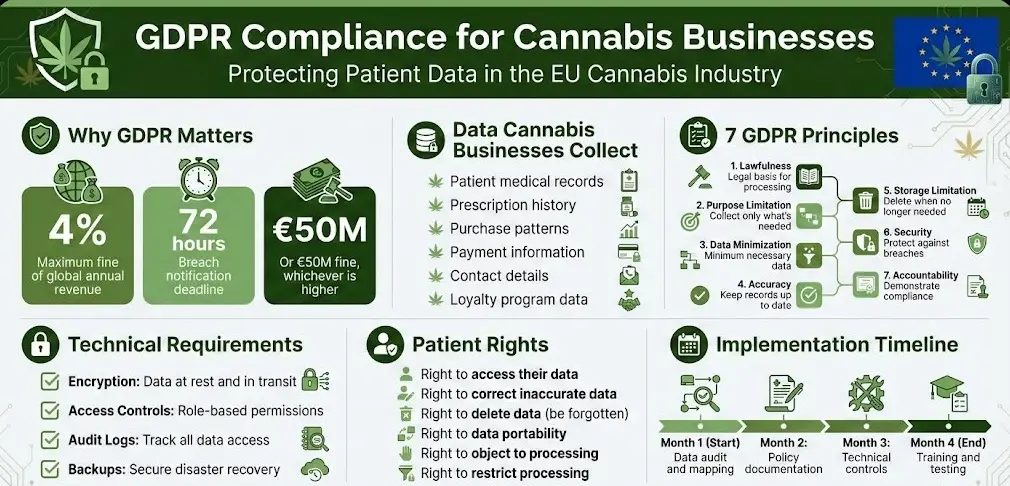
The maximum GDPR penalty reaches €20 million or 4% of global annual revenue, whichever is greater. With over €5.88 billion in total fines issued since 2018 and individual penalties now regularly exceeding €100 million for major violations, regulators have demonstrated they're willing to impose severe consequences for non-compliance.
For cannabis businesses, the risk profile intensifies significantly. Medical cannabis operators handle health data—classified as "special category data" under GDPR Article 9, requiring enhanced protections. Patient records revealing cannabis use implicitly disclose sensitive health conditions, creating exposure to discrimination, employment consequences, and social stigma if mishandled.
Regulatory scrutiny of the cannabis sector already runs higher than conventional industries. Combining controlled substance oversight with data protection enforcement creates a compliance landscape where mistakes carry amplified consequences.
This guide provides:
- A comprehensive breakdown of GDPR requirements as they apply to cannabis operations
- Cannabis-specific compliance challenges and solutions
- Technical security requirements for patient and customer data
- Step-by-step implementation roadmap
- Practical checklists for ongoing compliance monitoring
Whether you're operating a medical cannabis dispensary in Germany, a cultivation facility in the Netherlands, or a cannabis social club in Spain, understanding and implementing robust GDPR compliance isn't optional—it's the foundation of sustainable business operations in Europe's evolving cannabis market.

Section 1: What GDPR Means for Cannabis Operations
The GDPR applies to any organization processing personal data of individuals within the European Economic Area (EEA), regardless of where the organization itself is based. For cannabis businesses, this creates obligations across four primary data categories.
Patient and Customer Data
Medical cannabis operators collect extensive personal information that triggers GDPR obligations:
- Identity verification data: Names, addresses, dates of birth, government ID numbers
- Medical records: Prescriptions, diagnoses, treatment histories, physician referrals
- Transaction records: Purchase histories, product preferences, consumption patterns
- Contact information: Email addresses, phone numbers, communication preferences
Recreational cannabis businesses (where legal) collect similar identity and transaction data, though without the medical classification that triggers special category protections.
Employee Data Obligations
Cannabis businesses must also protect employee personal data, including:
- Background check results (often required for cannabis industry licensing)
- Employment contracts and personnel files
- Payroll and banking information
- Security clearance documentation
- Training and certification records
Vendor and Supplier Data Processing
B2B relationships create data processing obligations for:
- Vendor representative contact information
- Contract and payment details
- Due diligence documentation
- Compliance certifications
- Delivery and logistics data
Marketing Data
Customer relationship management and marketing activities involve:
- Email marketing lists and consent records
- Website analytics and cookie data
- Retargeting pixel information
- Social media engagement data
- Customer preference profiles
Each data category carries specific GDPR obligations for collection, storage, processing, and deletion. Cannabis businesses must document the legal basis for processing each data type and maintain records demonstrating compliance.
Section 2: The 7 GDPR Principles Cannabis Businesses Must Follow
GDPR Article 5 establishes seven fundamental principles governing all personal data processing. Cannabis businesses must embed these principles into every operational process involving personal information.
 CannaSecure